


Water Heater Repair & Installation For Your Waynesboro, PA Home
Cold showers aren't a badge of honor — they're a sign your water heater's given up the ghost. Whether you're dealing with a busted heating element, mysterious puddles forming under your tank, or it's finally time to ditch that 15-year-old dinosaur taking up half your basement, we've got you covered. Frosty Friends handles everything from quick repairs that get your hot water flowing again today to complete installations of new tanked or tankless systems.
Give us a ring at 814-386-7600 or message us online, and let's get your hot water situation sorted out.
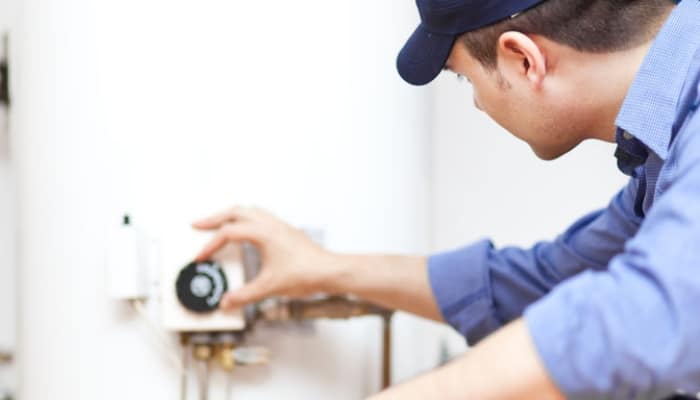
What To Know About Water Heater Repair
Sometimes your water heater just needs a little bit of upkeep, rather than a full replacement.
What Are Common Water Heater Problems?
Water heaters develop all kinds of issues during their lifespan, and catching problems early prevents total system failure. Recognizing what's gone sideways helps you explain the situation when you call for service.
- No hot water whatsoever: Heating elements burn out in electric models, while gas units suffer pilot light failures or gas valve malfunctions
- Temperature swings like a pendulum: Faulty thermostats, sediment pileup, or undersized tanks cause wild temperature fluctuations that turn every shower into a guessing game
- Rumbling or popping noises: Sediment accumulation at tank bottoms creates racket during heating cycles, signaling your tank needs flushing
- Leaks pooling around the base: Failed drain valves, loose connections, or corroded tanks allow water to escape, which damages floors and surrounding areas
- Rusty or brownish water: Corroding anode rods or deteriorating tank interiors produce rust that discolors your entire hot water supply
- Rotten egg smell from hot taps: Bacteria growing inside tanks create sulfur-like odors that make your water smell absolutely foul
Should I Repair Or Replace My Water Heater?
This question trips up tons of homeowners, but certain factors point clearly toward one choice over the other. Age, repair costs, and problem type all influence whether fixing your current unit makes any sense.
- Age tells the whole story: Tank water heaters past 10-12 years rarely justify expensive repairs since they're already living on borrowed time
- Repair costs determine value: When repair bills hit half of replacement pricing, new equipment makes better financial sense
- Tank leaks equal automatic replacement: Leaking tanks can't be repaired effectively — the tank itself has corroded through and needs replacing entirely
- Multiple failures happening together: When several components quit simultaneously, your system is screaming that it's done for good
- Energy bills are creeping upward: Older units losing efficiency cost more each month to operate than new equipment would
- Frequent service calls adding up: Calling us out multiple times yearly means you're dumping money into dying equipment
Water Heater FAQs
Standard water heater installations replacing similar equipment typically take 2-4 hours from start to finish. Straightforward tank swaps finish quickest — replacing a 40-gallon electric with another 40-gallon electric takes 2-3 hours usually. Tankless installations stretch to 4-8 hours since they often require new gas lines, electrical upgrades, or complex venting. Switching fuel types (gas to electric or vice versa) adds significant time for new utility connections. Code compliance work, like adding expansion tanks, drain pans, or updated venting, extends timelines. We handle everything, including permits, disposal of your old unit, and complete cleanup same day.
Water heater repairs in southern Pennsylvania typically run $150-$600, depending on what's broken. Simple fixes like thermostat adjustments or heating element replacements stay around $150-$300, while more complex repairs like gas valve replacements or extensive leak repairs push $400-$600. Tank leaks aren't repairable — that's full replacement territory running $1,200-$3,000+. We always diagnose the problem first and provide upfront pricing before starting any work, so you're never blindsided by the final bill.
Water heater installation costs in southern Pennsylvania run $1,200-$4,500, depending on equipment type, fuel source, capacity, and complexity. Basic tank installations (standard 40-50 gallon gas or electric) start around $1,200-$2,000. Premium tanks with extended warranties or features cost $2,000-$3,000. Tankless systems run $2,500-$4,500 installed due to higher equipment costs plus additional labor for venting, gas lines, or electrical upgrades. Fuel conversions add $500-$1,500 for new utility connections. Permits typically cost $50-$200, and code compliance upgrades like expansion tanks or drain pans add $200-$800, depending on requirements.
Water Heater Installation
Sometimes you're better off just installing a new system - especially when it comes to advantages in energy-efficiency and capacity.
Tanked Vs. Tankless: Which Makes Sense For My Home?
The tank versus tankless debate boils down to your priorities — upfront costs, monthly bills, available space, and how your household uses hot water. Neither option wins universally; the right choice fits your specific situation.
- Tank heaters cost way less upfront: Traditional 40-50 gallon tanks run $1,200-$2,000 installed compared to $2,500-$4,500 for tankless systems
- Tankless delivers unlimited hot water: Never run out mid-shower since tankless heats water continuously as you're using it
- Tank systems are simpler to fix: Straightforward technology means lower repair costs and parts availability at any hardware store
- Tankless slashes energy consumption: Heating water only when needed cuts energy use 20-30% versus constantly reheating stored water
- Space requirements differ dramatically: Tankless units mount on walls, freeing up floor space that bulky 60-gallon tanks hog
- Lifespan favors tankless long-term: Tankless systems last 15-20 years, while traditional tanks typically last 8-12 years
What Size Water Heater Does My House Need?
Getting the size right prevents running out of hot water during morning rush hour or wasting money heating water nobody's using. Household size, usage habits, and peak demand all determine proper capacity.
- Start with household headcount: General guideline suggests 30-40 gallons for 1-2 people, 40-50 for 3-4 people, 50-80 for 5+ people
- Peak demand trumps average use: Homes where everyone showers back-to-back need less capacity than houses with simultaneous showers happening
- First-hour rating matters most: FHR tells you actual gallons delivered during peak morning usage, not just what the tank holds
- Tankless sizing uses flow rates: Calculate GPM (gallons per minute) needed for simultaneous fixtures to determine required tankless output
- Bathroom count affects requirements: More bathrooms increase the probability of multiple people using hot water at once
- Appliance efficiency changes need: Modern high-efficiency washers and dishwashers use considerably less hot water than older models did
Your Hot Water Problems, Solved Today
Whether your current water heater needs emergency repair or you're ready to upgrade to newer, more efficient equipment, we handle the entire process from diagnosis through installation and cleanup. Our repairs get completed same-day whenever possible, and our installations meet all codes with solid warranties backing our work. Call 814-386-7600 or contact us online to get your hot water flowing reliably again.